App and web app design and development
Digital products shaped around the task, engineered for real states and released in useful stages.
Talk through your app idea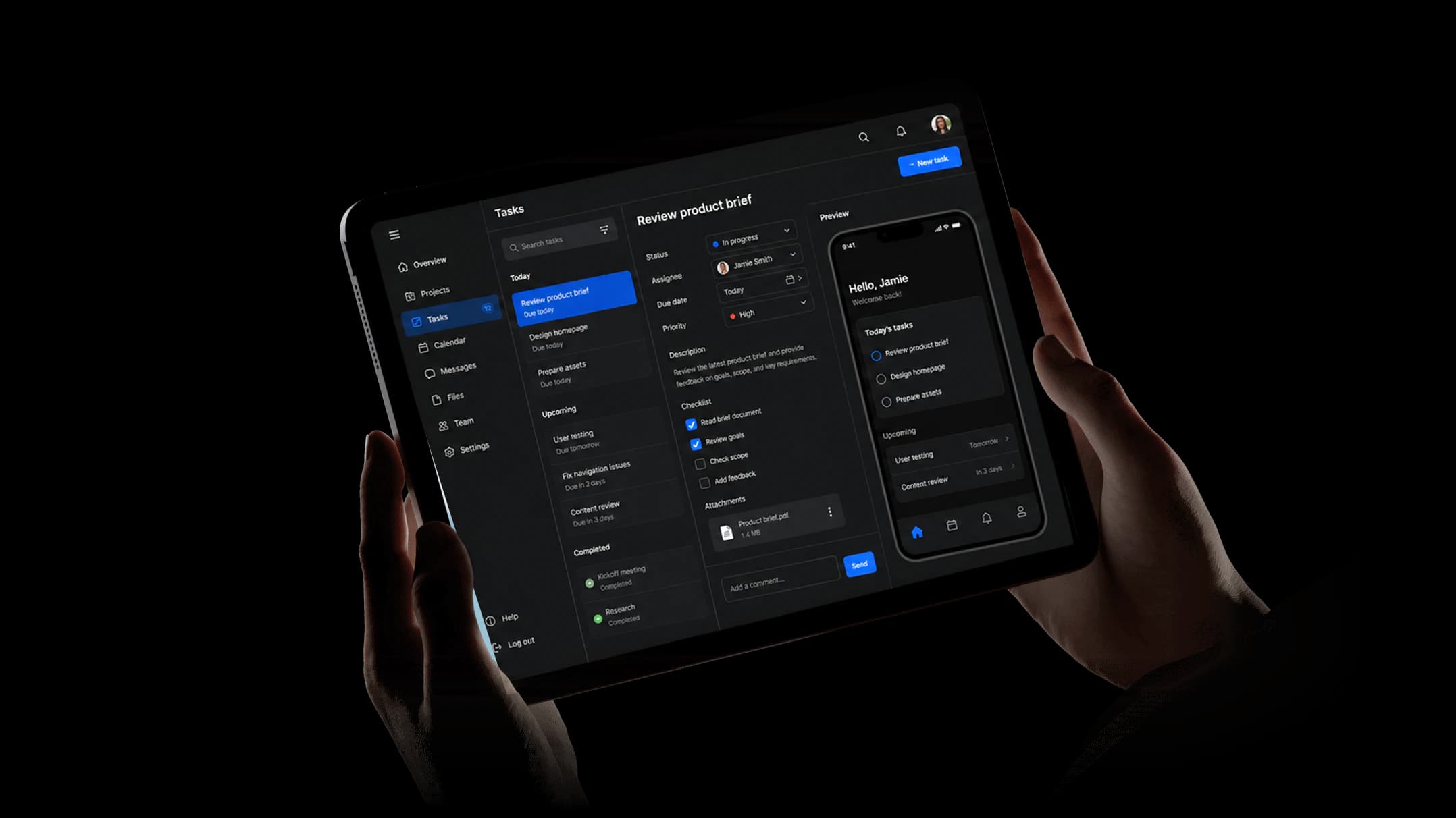
A product has to work before it can impress.
What is app and web app development?
App and web app development turns a business process or product idea into a working digital service. A complete engagement can cover product discovery, user journeys, interface and prototype design, application architecture, data and permissions, integrations, testing, deployment planning and a measured route for improving the product after its first release.
The best digital products reduce effort. We start with the task, the people doing it and the information the system needs to hold, then shape the interface and engineering around the simplest dependable route through.
A focused first release
The first version concentrates on the smallest useful product instead of stretching budget across a long list of half-finished features.
Clear user journeys
Primary tasks, permissions and edge cases are mapped before screens multiply, reducing dead ends and expensive changes later.
A product that can evolve
Interface patterns, data and technical decisions are structured so the product has a sensible route beyond its first release.
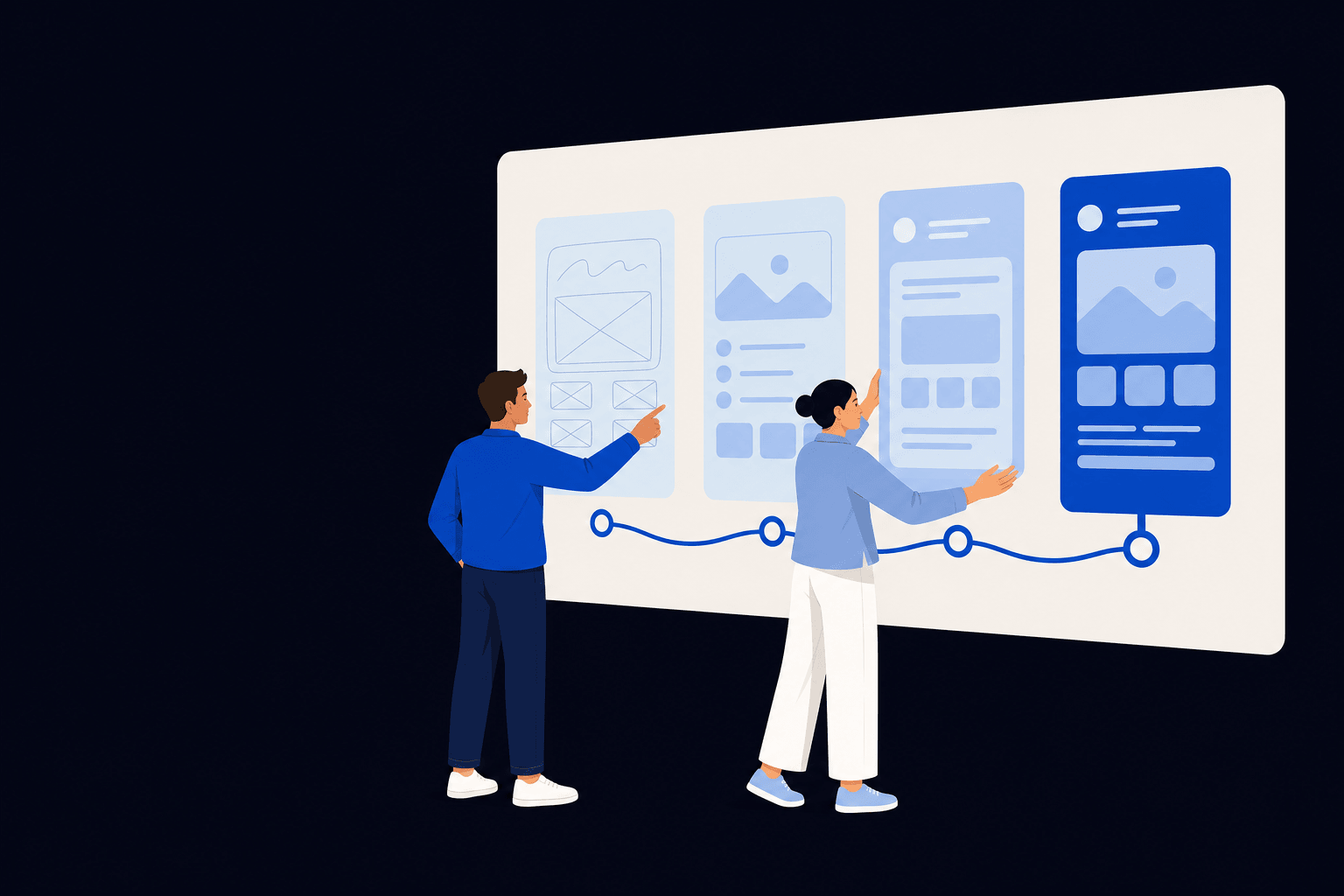
Design the behaviour, not just the screens.
A dependable product accounts for permissions, validation, errors, empty states and the transitions between them. Those less-visible decisions are what make an app feel obvious when people use it for real work.
- Roles and permissions
- Success, failure and recovery states
- Data and integration behaviour
- A measurable route after release
Reduce risk before the expensive decisions.
Product work moves from evidence to interaction to engineering. Each stage produces something concrete enough to review before the next investment is made.
Frame the problem.
Clarify the users, business rules, data and constraints that define what a useful product must do.
Test the route.
Turn the primary journeys into a clickable model so navigation, language and interaction can be challenged early.
Choose the right foundation.
Define the application structure, data model, access rules, integrations and delivery route needed for the agreed release.
Join interface and logic.
Develop in reviewable increments, covering the important states and checking the system as a connected product.
Put the useful version to work.
Prepare the environments, quality checks, documentation and feedback route needed to release and learn deliberately.
What product design and build can include.
An app is more than its screens. A complete scope considers user roles, data, security, system states, integrations, release operations and the work required after people begin using it.
Define the useful version
We turn the opportunity into a testable product scope with a clear first release and known dependencies.
- Business goal and user-need definition
- User groups, roles and permissions
- Feature prioritisation and release boundary
- Core journey and requirement mapping
- Technical risk and dependency review
Design the whole journey
Flows and interfaces cover success, failure and waiting—not only the polished state shown in a presentation.
- User flows, wireframes and prototypes
- Responsive interface and design system
- Empty, loading, validation and error states
- Onboarding and in-product guidance
- Keyboard, touch and accessibility considerations
Build the product behind the interface
The technical route is selected around the users, platforms, data and operational needs of the agreed release.
- Application architecture and data modelling
- Authentication and role-based access
- API and third-party integrations
- Front-end, back-end and admin tooling
- Responsive web, PWA or app delivery as scoped
Release with evidence
Testing and operational visibility are designed into the scope so the team can see what works and respond when it does not.
- Validation and security-control review
- Automated and manual testing as appropriate
- Staging, production and release configuration
- Error reporting and agreed product analytics
- Technical documentation and handover
Different products need different first releases.
The platform, architecture and delivery plan are quoted after the core journey, data and operational responsibilities are understood.
Apps people choose to use
For portals, membership products, marketplaces and tools used directly by customers or communities.
- Account and onboarding journeys
- Customer dashboards and self-service
- Payments, messaging or external services
- Responsive web or app delivery
- Product analytics and feedback routes
Tools that remove friction
For operational workflows, admin systems and dashboards that replace scattered manual processes.
- Role-based operational workflows
- Data capture and approval routes
- Reporting and oversight interfaces
- Existing-system integrations
- Migration and adoption planning
Third-party services, platform accounts, hosting, penetration testing, regulated compliance work and ongoing support are identified and priced separately where the product requires them.
The practical questions.
Can you help if the idea is still early?
Yes. Discovery can be a standalone first phase. It turns the idea into prioritised journeys, requirements, risks and a practical release recommendation before a larger commitment is made.
Do you build both the interface and the working product?
Yes, where the agreed scope is a suitable fit. Product strategy, UX, interface design and engineering can be delivered together or scoped as distinct phases with clear outputs.
Will it be a web app or a mobile app?
That decision follows the users, device context, offline needs, integrations and distribution requirements. We recommend the route that supports the product rather than deciding the platform first.
How do you handle security?
Security requirements are identified from the data, roles and risk of the product. Authentication, access control, validation, secrets, dependencies and logging are considered in the technical scope, with specialist testing added where appropriate.
Can the product grow after launch?
Yes. The first release can include an agreed measurement and support route, with later features prioritised from real use rather than added to the initial scope by default.
Bring us the unfinished thought.
You do not need to arrive with the whole brief worked out.
Talk through your app idea